
"Lest We Forget"
Why we must cherish our small towns and the vestiges of tradition left us

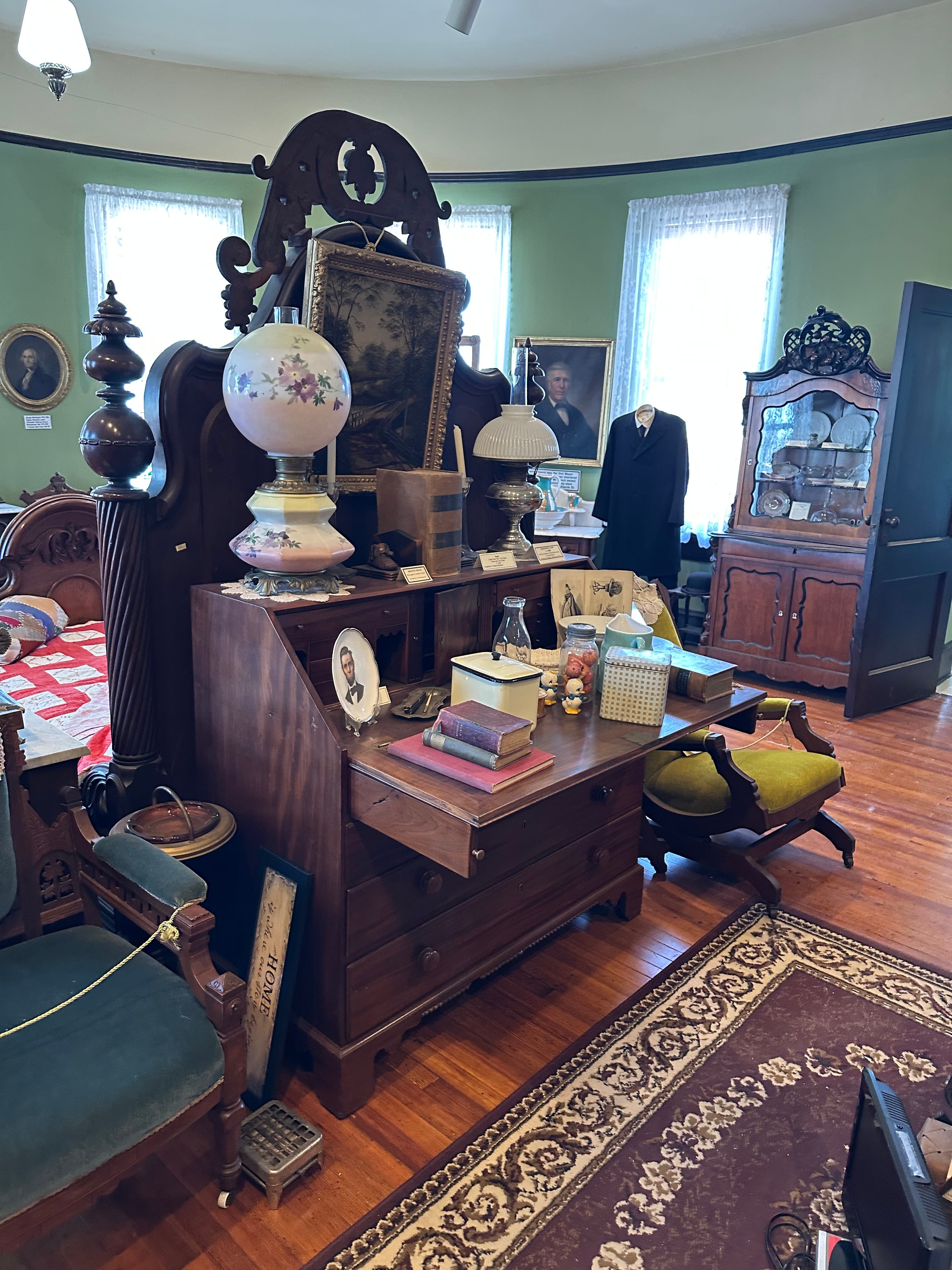
Driving through quaint Dixboro, Michigan as I would on any other day, I notice a sign that bears the motto “Lest We Forget.” I ruminate on its potential meaning, asking myself what we’re running the risk of forgetting. Hazarding a guess, I assume it relates to losing sight of our cultural heritage.
Dixboro is located between Ann Arbor and Plymouth, two fairly sizeable cities. I’m sure most wayfarers pass through that hamlet without considering its historical import. The farmers market and one-room schoolhouse just off the main road constitute the last vestiges of antiquity, and even these are generally overlooked by drivers heading to work and school and attempting to keep their ever-fluctuating list of obligations straight in their minds. Ann Arbor and Plymouth boast rich histories and plenty of unique traditions, from art fairs to ice festivals, but possess little of the small-town charm seen in Hillsdale, Jonesville, and Adrian, just to name a few outposts of older, simpler times. Many sociologists have written of the decline of what I’ll call “front porch culture,” a culture in which people subconsciously tracked the setting of the sun while conversing with their fellow neighbors and casually supervising their children, who were often engaged in creative play with what they could find outside. By way of a side note, the school where I work noticeably lacks a playset, a staple of suburban life; forts, rope swings, and stumps are its substitutes. Joshua Gibbs and Jonathan Haidt praise these alternatives, with the former contrasting single-use toys with versatile ones in Love What Lasts and the latter encouraging free and inventive play as he exposes “safetyism’s” effects on our playgrounds and neighborhoods in The Anxious Generation. Although our world has indeed grown more dangerous in recent decades and is fraught with religious, social, and political strife, isolating ourselves from its influences is not the answer. Didn’t Christ send His disciples out into the world “like sheep to the slaughter” (Romans 8:36), warning them that “a prophet is not without honor, except in his own country, and among his own kin, and in his own house” (Mark 6:4) and that some households would not receive them (Mark 6:11)? The Christian journey, while rewarding, has its challenges. What we may forget is that these challenges are sanctifying, not stultifying. They afford us opportunities to experience God’s love and mercy and become who we are meant to be. It is just this sort of life, this life of vulnerability and openness, that we have rejected in our worldly and hyper-developed cocoons. Evelyn Waugh identifies a “neurosis in the air which the inhabitants mistake for energy” (Brideshead Revisited, 264), much like the well-nigh ceaseless buzzing Charles complains about in the first pages of the novel that the sight of Brideshead Castle quashes; in just a few fragmentary lines from “Howl”, Allen Ginsberg captures the desultory spirit of his age:
angelheaded hipsters burning for the ancient heavenly connection to the starry dynamo in the machinery of night,
who poverty and tatters and hollow-eyed and high sat up smoking in the supernatural darkness of cold-water flats floating across the tops of cities contemplating jazz,
who sank all night in submarine light of Bickford’s floated out and sat through the stale beer afternoon in desolate Fugazzi’s, listening to the crack of doom on the hydrogen jukebox,
Granted, these passages are, in many cases, exaggerations. A plethora of cities come to mind where the arts occupy a collective place of honor and where literary societies and other cultural groups still have a foothold. As captivating as a bustling metropolis might be, I’ve pledged my loyalty to smaller towns, like Hillsdale.
When I moved to Hillsdale in preparation for my freshman year of college, my urban sensibilities were slightly offended by the city’s bucolic and isolated nature. What is there to do in such a town? I thought to myself. Devoid of the franchises and familiar landmarks of industrial America, the town seemed, at first glance, rather dull and almost too quiet for me.
A mere two years later, I found myself completely won over by Hillsdale’s charms. I was not yet at the point of deciding to stay there long-term, though- it took two formative, albeit difficult, postgraduate years back in my hometown to unearth my longing to return. During that period, I consistently felt a pull to return to the place that shaped me so profoundly but continued to honor my obligations in the city where I was raised.
In the wake of some jarring life developments, though, I could finally move back to Hillsdale in search of renewal and fellowship. Hearing it described as “quiet” and “empty” in the summer by classmates in years past, I was pleasantly surprised by the manner in which the town welcomed me back with open arms. Ironically, Hillsdale’s motto is “It’s the people." Its people obviously had a hand in bringing me back. But the city also inspired me to return in its own right. My summer was chock-full of local concerts, outings with friends, movie nights, hosting, cooking, and reading and enriched by the agrarian landscape and historical buildings in the vicinity.
According to Wendell Berry, a farmer and writer whose love for and loyalty to his land and his people manifests itself in all his writings, “a community is the mental and spiritual condition of knowing that the place is shared, and that the people who share the place define and limit the possibilities of each other’s lives. It is the knowledge that people have of each other, their concern for each other, their trust in each other, the freedom with which they come and go among themselves” ("The Long-Legged House,” 17, https://www.azquotes.com). In another essay entitled “The Two Economies,” he makes the following claims:
That we can prescribe the terms of our own success, that we can live outside or in ignorance of the Great Economy are the greatest errors. They condemn us to a life without a standard, wavering in inescapable bewilderment from paltry self-satisfaction to paltry self-dissatisfaction. But since we have no place to live but in the Great Economy, whether or not we know that and act accordingly is the critical question, not about economy merely, but about human life itself. It is possible to make a little economy, such as our present one, that is so short-sighted and in which accounting is of so short a term as to give the impression that vices are necessary and practically justifiable. When we make our economy a little wheel turning in opposition to what we call “nature,” then we set up competitiveness as the ruling principle in our explanation of reality and in our understanding of economy; we make of it, willy-nilly, a virtue. But competitiveness, as a ruling principle and a virtue, imposes a logic that is extremely difficult, perhaps impossible, to control. That logic explains why our cars and our clothes are shoddily made, why our “wastes” are toxic, and why our “defensive” weapons are suicidal; it explains why it is so difficult for us to draw a line between “free enterprise” and crime. If our economic ideal is maximum profit with minimum responsibility, why should we be surprised to find our corporations so frequently in court and robbery on the increase? Why should we be surprised to find that medicine has become an exploitive industry, profitable in direct proportion to its hurry and its mechanical indifference? People who pay for shoddy products or careless services and people who are robbed outright are equally victims of theft, the only difference being that the robbers outright are not guilty of fraud. If, on the other hand, we see ourselves as living within the Great Economy, under the necessity of making our little human economy within it, according to its terms, the smaller wheel turning in sympathy with the greater, receiving its being and its motion from it, then we see that the traditional virtues are necessary and are practically justifiable. Then, because in the Great Economy all transactions count and the account is never “closed,” the ideal changes. We see that we cannot afford maximum profit or power with minimum responsibility because, in the Great Economy, the loser’s losses finally afflict the winner. Now the ideal must be “the maximum of well-being with the minimum of consumption,” which both defines and requires neighborly love. Competitiveness cannot be the ruling principle, for the Great Economy is not a “side” that we can join nor are there such “sides” within it. Thus, it is not the “sum of its parts” but a membership of parts inextricably joined to each other, indebted to each other, receiving significance and worth from each other and from the whole. One is obliged to “consider the lilies of the field,” not because they are lilies or because they are exemplary, but because they are fellow members and because as fellow members, we and the lilies are in certain critical ways alike. To say that within the Great Economy the virtues are necessary and practically justifiable is at once to remove them from that specialized, sanctimonious, condescending practice of virtuousness that is humorless, pointless, and intolerable to its beneficiaries. For a human, the good choice in the Great Economy is to see its membership as a neighborhood and oneself as a neighbor within it. I am sure that virtues count in a neighborhood—to “love thy neighbor as thyself” requires the help of all seven of them—but I am equally sure that in a neighborhood the virtues cannot be practiced as such. Temperance has no appearance or action of its own, Reverberations nor does justice, prudence, fortitude, faith, hope, or charity. They can only be employed on occasions. “He who would do good to another,” William Blake said, “must do it in Minute Particulars.” To help each other, that is, we must go beyond the coldhearted charity of the “general good” and get down to work where we are: “Labor well the Minute Particulars, attend to the Little-ones,/And those who are in misery cannot remain so long/If we do but our duty: labor well the teeming Earth.” It is the Great Economy, not any little economy, that invests minute particulars with high and final importance. In the Great Economy, each part stands for the whole and is joined to it; the whole is present in the part and is its health. The industrial economy, by contrast, is always striving and failing to make fragments (pieces that it has broken) add up to an ever-fugitive wholeness. Work that is authentically placed and understood within the Great Economy moves virtue towards virtuosity—that is, toward skill or technical competence. There is no use in helping our neighbors with their work if we do not know how to work. When the virtues are rightly practiced within the Great Economy, we do not call them virtues; we call them good farming, good forestry, good carpentry, good husbandry, good weaving and sewing, good homemaking, good parenthood, good neighborhood, and so on. The general principles are submerged in the particularities of their engagement with the world (198-200).
Source: www.worldwisdom.com
I regret to inform you that I have only scratched the surface of Berry’s works at this juncture. They await my perusal on my ever-expanding digital (Goodreads) list of books I must read. I remain grateful to my “Technology and Society” professor at Franciscan who exposed me and my peers to some of the author’s essays and can say that my curiosity has been piqued. I quote these essays to bring home a key point: a good community addresses temporal (i.e. human, material, etc.) needs with an eye to the eternal ramifications of human actions. Hillsdale has proven to be one such community, with churchgoing students and families conversing about the good and seeking out ways to enrich their minds and souls (concerts, lectures, church services, etc.) while attending to the exigencies of daily life (work, school, projects, etc.). At both my school and my parish, families help each other and share their lives- joys and struggles alike- with one another; teachers instruct pupils whom they knew as infants; people of different faith backgrounds have meals together; all read and debate about monumental issues with a zeal that is contagious. Additionally, it is normal to dress up- in fact, tacitly encouraged- and normal to convene at the weekly summertime farmers market; it is common to take long, rambling walks for the thrill of it; it is normal to regularly host poetry nights and small groups; it isn’t unheard of to see showings of “Oklahoma” at local theatres and attend fairs and festivals. I’m still astonished (and think I shall always be) by the facts that Annie Oakley and “Wild Bill” Hickok and the Ringling Brothers rolled through Hillsdale with their respective shows at the turn of the century and that a row of stately Victorian homes downtown survives to bespeak Hillsdale’s days of glory. In short, it is a beautiful, irreplaceable community, and I am honored to be part of it at long last. I know I can safely put down roots here amidst growing families and the flurry of communal activities, not workaday commitments.
Recently, I took a small road trip to Adrian, a small town 45 minutes from Hillsdale, where I met up with my dear friend Grace (the same friend with whom I’m reading Anna Karenina). Little did we expect that our last stop would be the Lenawee County Historical Museum. We had just about settled on going where our fancies took us when a young tour guide named Em approached us. With her vintage sensibilities (and vintage name), big smile, and enthusiasm for the history of the area, we promptly took her up on her offer to show us around. Em is only a high schooler, but she could easily pass as a college student with her maturity and expertise. We had an entertaining and enlightening tour that even involved time in the spotlight (she turned on the stage lights in the auditorium attached to "The Victorian Room”- the photo above was taken in it- and had us pose for a photo)!
Grace and I left thinking that we need more people like her (especially young people) in the world. So many young people are numb to the appeal of our rich heritage, even of a contained area (just this one county is wildly historical). C.S. Lewis famously charged English teachers to “irrigate deserts” in The Abolition of Man. Let’s face it, the souls of many moderns are deserts. Their languishing, idle, and jaded souls, arid plots, could certainly use watering; “The Love Song of J. Alfred Prufrock” only confirms this prognosis. I can’t refrain from attaching at least part of the poem to my post:
“Let us go then, you and I,
When the evening is spread out against the sky
Like a patient etherized upon a table;
Let us go, through certain half-deserted streets,
The muttering retreats
Of restless nights in one-night cheap hotels
And sawdust restaurants with oyster-shells:
Streets that follow like a tedious argument
Of insidious intent
To lead you to an overwhelming question ...
Oh, do not ask, “What is it?”
Let us go and make our visit.
In the room the women come and go
Talking of Michelangelo.
The yellow fog that rubs its back upon the window-panes,
The yellow smoke that rubs its muzzle on the window-panes,
Licked its tongue into the corners of the evening,
Lingered upon the pools that stand in drains,
Let fall upon its back the soot that falls from chimneys,
Slipped by the terrace, made a sudden leap,
And seeing that it was a soft October night,
Curled once about the house, and fell asleep.
And indeed there will be time
For the yellow smoke that slides along the street,
Rubbing its back upon the window-panes;
There will be time, there will be time
To prepare a face to meet the faces that you meet;
There will be time to murder and create,
And time for all the works and days of hands
That lift and drop a question on your plate;
Time for you and time for me,
And time yet for a hundred indecisions,
And for a hundred visions and revisions,
Before the taking of a toast and tea.
In the room the women come and go
Talking of Michelangelo.
And indeed there will be time
To wonder, “Do I dare?” and, “Do I dare?”
Time to turn back and descend the stair,
With a bald spot in the middle of my hair —
(They will say: “How his hair is growing thin!”)
My morning coat, my collar mounting firmly to the chin,
My necktie rich and modest, but asserted by a simple pin —
(They will say: “But how his arms and legs are thin!”)
Do I dare
Disturb the universe?
In a minute there is time
For decisions and revisions which a minute will reverse.
For I have known them all already, known them all:
Have known the evenings, mornings, afternoons,
I have measured out my life with coffee spoons;
I know the voices dying with a dying fall
Beneath the music from a farther room.
So how should I presume?”
Poem Source: https://www.poetryfoundation.org
In the heart of every human soul lie the seeds of love and wonder, and that alone should fill us with hope. It is our duty to educate, or at least mentor, these souls and bring them closer to the truth and, by extension, God. If we keep procrastinating, lazily saying, “There will be time” over and over again, we will have failed as intellectuals and Christians. For we only have the amount of time God gives us, and we must use it well (as I’ve said time and again in these “pages”). While “measur[ing] out [one’s] life with coffee spoons may temporarily work- I say this as a coffee lover-, our ultimate goal should be to live virtuous and fulfilling lives and await that distant day when God will judge us based on “how well we loved others.” We need not assimilate to the “yellow fog” that seems to encompass our society in this present age; rather, we should reintroduce the vibrancy, colors, sanity (yes, I’m being serious), and rootedness that once defined our communities. For really, it all starts there.
Hillsdale sounds like exactly my kind of place! What a beautiful post ☺️💐